
The House of the Seven Hens
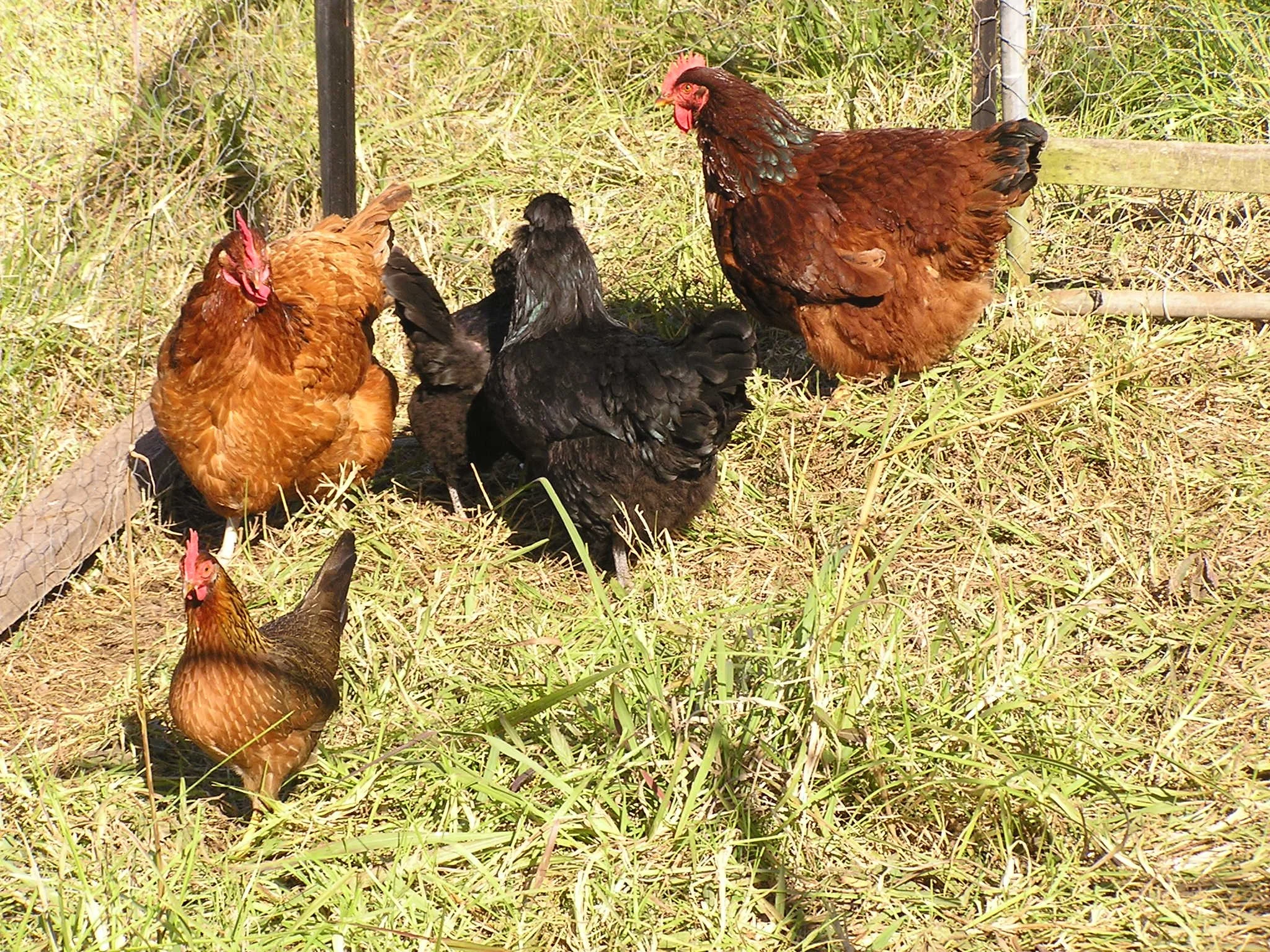
Our first clutch of hens free ranging at Near River
Once we’d begun to settle in to living here at the farm, our thoughts turned to livestock of some kind. Broadly, Therese and I would tend an acre of market garden, and sell the produce through a CSA (Community Supported Agriculture) model, and our house and farm partners would raise a small herd of Dexter cattle.
We’d had a few minor shocks as city siders (or ‘blow-ins’ as we’d be known for quite some time). Calling in to the real estate agents to pick up the keys to our new home was enlightening, as we were told there weren’t any, ‘it’s a country house, there’s no need to lock it’. Okay, that’s a little strange. Clearly the locksmith was the first tradie we’d have to contact, though we were given the advice that ‘If someone’s going to travel 20 kms to burgle your house, you don’t want to make it any harder and upset them anymore.’ Eighteen odd years later, we continue to learn. At times, the curve has been steep, and not only in the realm of farming.
In addition to the property having suitable housing for two middle aged couples, other structures included a large polyhouse with a second frame in place, and a potting shed with a chook run attached. They always look much better when there are chickens in them, so the hunt was on. Our experience in this field was thin to say the least, perhaps best summed by saying that I may have seen an episode or two of The Good Life and studied John Seymour’s The Complete Book of Self Sufficiency (The Classic Guide for Realists and Dreamers) though that was about it. How hard could it be? As with many of our endeavours, we simply jumped right on in. And clearly the universe was listening as within ten days a neighbour had a sign out front saying he’d ‘7 hens for sale’; perfect.
Now to be fair, this is a while ago, so the memory is a little hazy on the finer details, though I’m pretty sure we scored a couple of bantams in this first clutch. The other five were a mix of breeds, and I can’t be certain of their age, but what mattered was that we had our first animals on the farm, and we might get some eggs.
‘Some eggs’ – remember that. Up until this point our food purchases had been principled though we were still learning. Certainly, little or no imported goods, though most of it was through the supermarket, and the eggs, well free range if we could get them. Then the revelation that totally altered our outlook – these eggs of ours had flavour, depth, colour and richness. The hens had been fed certified organic feed, drunk pure river water, scratched through and feasted on grasses and bugs, all the while with the sun on their backs and the wind in their combs; not how ‘regular’ hens live. Add to this the care that was being given to them and the intention backing it all up. It follows that their eggs would be amazing, superb even, and so easy to poach as they were soo fresh. Maybe free-range eggs could be a good addition to the vegetable boxes we were working towards.
We purchased more hens, importantly ‘point of lay’; we dabbled with ones that laid blue eggs (Araucana), and as we scaled, to differ between the flocks ages, rotated Rhode Island Reds with Black Australorp and then White Australorp. We housed them in portable huts on skids that the tractor or ute could tow so that their poo could be utilised directly where it was needed (it’s magic stuff) and that meant that they had fresh pasture to fossick through every few days. Each morning they’d be let out into their run, and come sundown, they’d be locked up for the night. The eggs would be collected daily, graded, washed, candled, and then packed. And we never had enough of them, they would always sell out.
We learned how the hens diet affected the flavour of the egg, the shell’s thickness, and the yolk’s colour. Who’d have thunk? How the spring flush of fresh new grasses deepened the colour of the yolk, how the peak in production meant that on occasion the shell would be thinner. All obvious outcomes, though never thought about as a supermarket consistent (but lower) quality consistent availability consumer. The biggest learning? Hens go ‘off the lay’ in winter. It makes sense that if you were popping out an egg every other day, you’d want a break, but eggs are always available, aren’t they? Seems not. Chickens like most poultry use photoperiod — day length — as their primary reproductive trigger. The amount of light detected through their eyes stimulates the reproductive system and hence egg production. Therefore each May through to August as daylight lessens, when you are south of the equator, egg production at ethical farms drops significantly, by more than 50%. Commercial factory farms manipulate their birds by leaving lights on permanently to have laying be continuous, which surely affects the animal’s health and wellbeing, and obviously the quality of the eggs would be impacted too.
When we commenced egg production, the legal requirement was that you had to notify the Food Authority (a state-based entity) that you were raising chickens for egg production for commercial purposes, which we did. A short time later, the requirement altered to obtaining a licence if your production was more than 20 dozen a week, and you’d have to stamp each egg for traceability, and keep records, oh and have an annual inspection. Our introduction to the realm of food legislation had begun.
There were three episodes with regulating bodies through this period that stand out. The first was our initial inspection. We were the third egg facility that our local representative had inspected under the new licencing rules, and her boss from Sydney was along for the day to assist. We had, and still have, a rudimentary attitude to biosecurity – sunshine and fresh air are the best preventative measures. When the pair arrived, they offered to don ‘moon suit’ coveralls and foot covers, which they were told weren’t necessary. We walked out to the huts which were duly viewed, a far cry from the sanitised, lifeless indoor caged facilities they’d inspected earlier in the day. Then to our ‘grading room’, an un-lined steel shed with a concrete floor. Paperwork was viewed, washing and candling methods explained, and all seemed to be well. Then a small hole in the wall was noticed. We would be faulted on our inspection for this hole – it could permit debris and vermin into the grading space. It was pointed out that the eggs had come from ‘outside’. No matter, the grading space had to be secure. And by the next inspection, the grading room also needed to be lined.
We kept raising chickens and selling eggs, with them gaining a minor cult following. They really were that good.
Our next audit with our Food Authority rep rolled around 12 months after the previous one. By this time many egg facilities had been inspected, so both of us were a little less anxious about proceedings, and her boss stayed in Sydney. We’d patched the offending hole in the wall and lined the interior of the grading room – big ticks all round. About this time the labelling rules for eggs were altered such that each carton needed to include a nutritional panel. For small scale operators such as us this meant creating a second label to be added to each carton until you used up the ‘old’ labels, then create new artwork and order a run of updated labels. All we wanted to do was grow real food for our community and the rules kept being amended. Anyway, the updated artwork as approved and on we went.
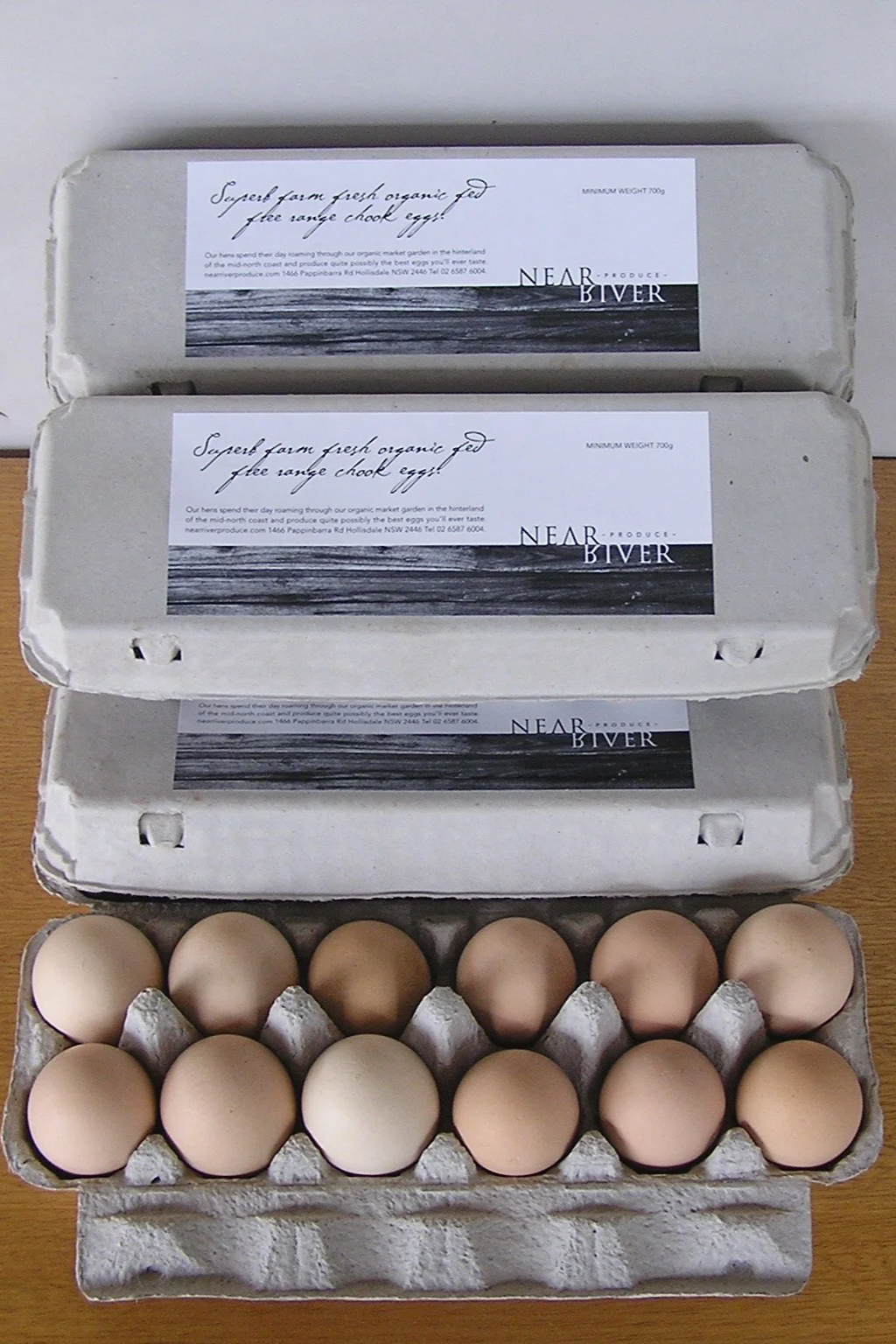
Our earliest label and those superb pasture raised eggs.
By this time, we’d been operating a stall at a weekly suburban mid-week farmers market that was proving successful. We had a range of fresh vegetables, our superb eggs, and a line of six different preserves from our citrus and vegetables. It was another field to become skilled in. About a month after our second Food Authority inspection, I was at this market midway through the four hour operating window when a gent with a pad and badge announced that he was from the Dept of Weights and Measures, and that he’d be issuing us with a fine as our egg carton label was non-compliant. What the ?? My initial response was to tell him to come back at the end of the market as he was impacting my ability to trade, or even better, call me and make an appointment like other statutory bodies do. He wasn’t having any of that, so I told him he’d need to wait until I’d finished serving our customers. The label was non-compliant because it didn’t have ‘12’ on the front. Don’t all full egg boxes come with 12 eggs? It needs to be stated. We did list ‘12’ on the rear label under contents, however that wasn’t good enough for this fella. Informing him that the state Food Authority had just approved the label four weeks ago meant little – his was a federal entity and that was that. The temperature lowered gradually, he did back down and issued us with a warning and we committed to updating the label on the next print run.
We recovered and in time moved to a weekly Saturday market which was to set us on a much firmer footing. We also learnt that striving for perfection at audits was not necessarily the best – leaving a small transgression to be found and written up by the inspector has them seen to be doing their job. This always reminds me of the quote from R. Buckminster Fuller ‘So we have inspectors of inspectors and people making instruments for inspectors to inspect inspectors’. Since then our attitude to the Food Authority as mellowed somewhat, and Australian food does have an excellent reputation worldwide, in part due to the high standards that are in place.
Looking back on the whole egg production side of the enterprise now, it’s not surprising how one facet of our farming life gave us a multitude of learning experiences. In many ways every ‘hurdle’ we leaped over with egg production – scaling, distribution, seasonality, legalities, let alone economics - gave us a rich lived-experience for what was to come. If we didn’t succeed with the eggs, then it should have been game over.
It wasn’t what we learned from the hens, it was here’s how we learned to learn.
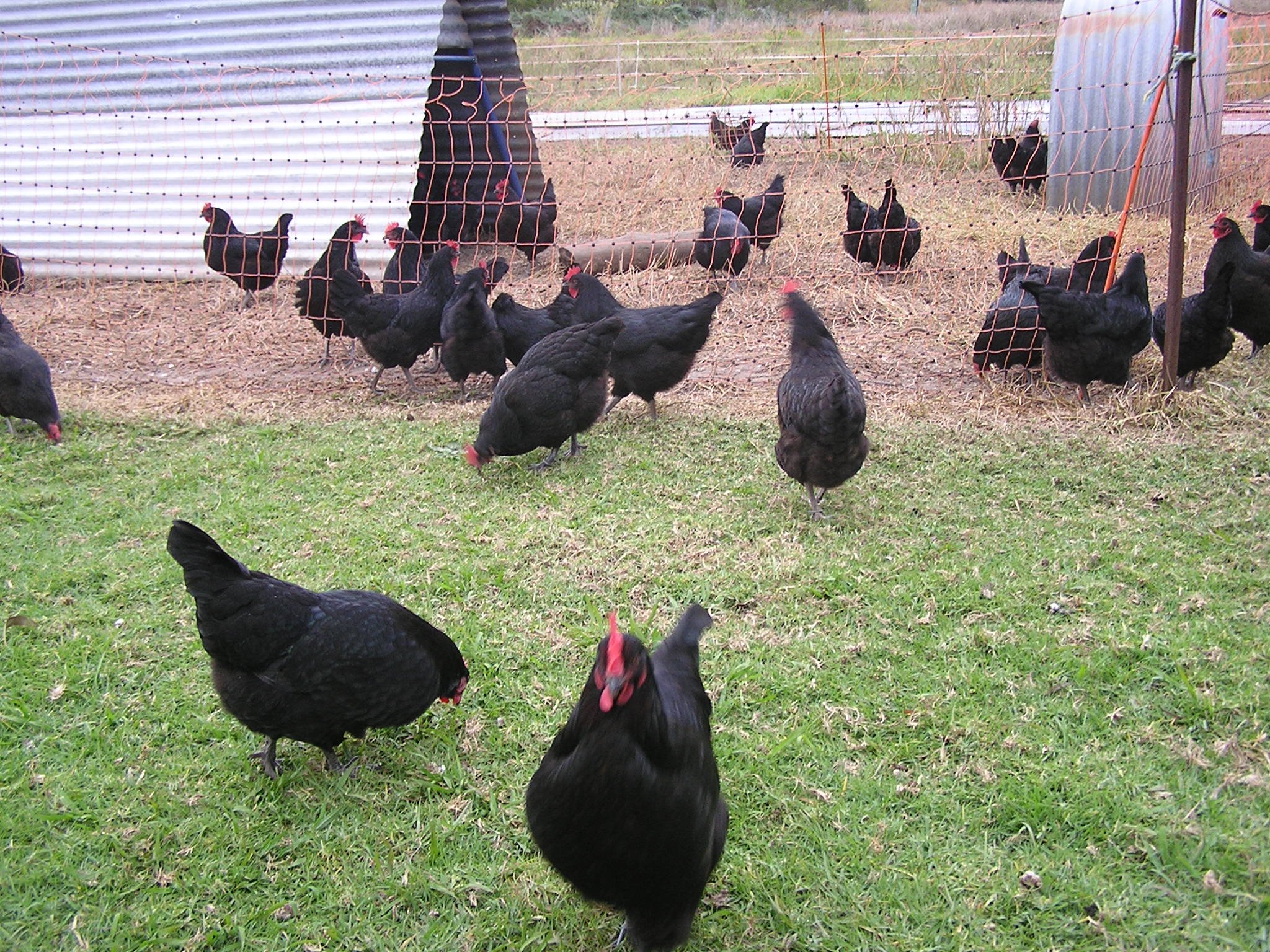
Black Australorp hens free ranging at Near River